

Eco-Friendly Screen Printing in Seattle: The 2026 Guide to Sustainable Custom Apparel
By 2026, a brand's environmental footprint is just as visible as the logo on its chest. You shouldn't have to choose between protecting the Puget Sound and getting the custom gear you need. Most traditional shops force you into massive bulk orders or rely on heavy plastisol inks that feel thick and use harsh chemicals. It's frustrating when you just want a dozen high-quality shirts for a local event or a small business launch. Finding reliable eco-friendly screen printing Seattle doesn't have to be a struggle or a compromise on speed.
We know you value quality and sustainability, but you also need a partner who respects your timeline and your budget. This guide shows you how to create premium custom apparel using advanced water-based inks and modern DTF techniques. You'll discover how to bypass high minimum order requirements while maintaining a professional finish that lasts. We'll explore the shifting regulatory landscape in Washington and explain why working with a local Bellevue expert provides the peace of mind that national online printers simply can't match. Get ready to elevate your brand with gear that looks great and does good for the PNW.
Key Takeaways
- Stay ahead of PNW sustainability trends by understanding why local brands are ditching toxic plastisol for water-based alternatives.
- Achieve a premium, breathable finish for your eco-friendly screen printing Seattle projects by choosing the right water-based or UV inks.
- Skip the bulk order stress with flexible printing options that let you create sustainable custom gear without high minimum requirements.
- Match your brand's values to your fabric by selecting the best organic and recycled garments from trusted providers like Allmade.
- Get your gear faster with a local Bellevue partner that combines innovative DTF technology with traditional craftsmanship for the Eastside.
Why Seattle is Leading the Shift to Sustainable Custom Printing
Seattle has always been a pioneer in environmental stewardship. From the sprawling tech campuses in Bellevue to the vibrant arts districts in Capitol Hill, there is a clear expectation for corporate social responsibility. Consumers here don't just look at the design on a shirt; they look at the values behind the production. Choosing eco-friendly screen printing Seattle services allows local businesses to align their brand with the community's deep-rooted commitment to the planet. It is about more than just a trend. It is a fundamental shift in how we manufacture goods in the Pacific Northwest.
It's vital to look beyond the garment label. While a recycled polyester hoodie is a great start, the printing process itself often carries a hidden environmental cost. Eco-friendly screen printing is a process utilizing non-toxic, water-based, or biodegradable materials. This approach ensures that the vibrant colors you see on your Custom Race Shirts or spirit wear don't come at the expense of our local ecosystems. By focusing on the chemistry of the ink and the efficiency of the equipment, local printers are setting a new standard for the industry.
The Environmental Impact of Traditional Printing
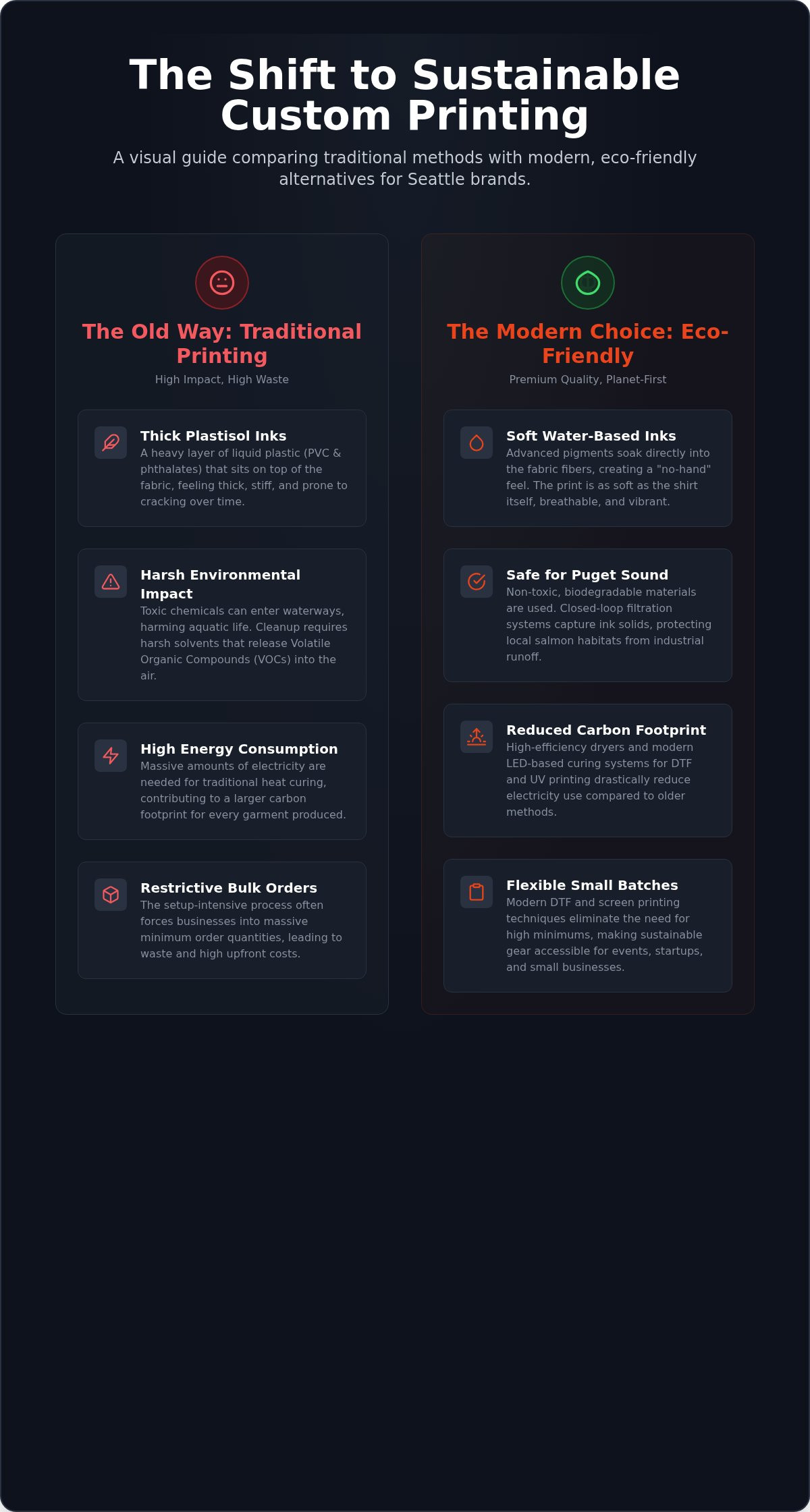
Traditional screen printing relies heavily on plastisol inks. These are essentially liquid plastic made from PVC and phthalates. These chemicals are persistent in the environment and can be toxic to aquatic life if they enter our local waterways. Heavy metals like lead and cadmium were common in older ink formulas; while many have been phased out, standard plastisol still requires harsh chemical solvents for cleanup. These solvents often release volatile organic compounds (VOCs) into the air, affecting both indoor air quality and the broader atmosphere.
Energy use is another major factor. Traditional curing methods require massive amounts of electricity to heat garments to high temperatures. Modern, sustainable shops use high-efficiency dryers and LED-based curing systems that drastically reduce the carbon footprint of every Custom Printed Hoodie or T-Shirt. This shift helps protect the Puget Sound while providing a superior, soft-hand feel for the wearer.
Local Regulations and Sustainability Standards
In the Puget Sound area, we operate under some of the strictest environmental guidelines in the country. King County provides specific frameworks for small businesses to manage hazardous waste and protect our drainage systems. Local studios that prioritize eco-friendly screen printing Seattle standards go beyond basic compliance. They implement closed-loop filtration systems to capture ink solids before water ever leaves the shop. This ensures that our local salmon habitats remain protected from industrial runoff.
Sourcing is equally important to the process. We look for the Global Organic Textile Standard (GOTS) when selecting materials. This certification ensures that the cotton used in your Custom Printed Polos was grown without synthetic pesticides and processed under fair labor conditions. By combining GOTS-certified garments with water-based inks, Seattle brands can offer products that are truly sustainable from seed to shelf. It provides a level of transparency that today's conscious consumers demand.
Decoding Eco-Friendly Inks: Water-Based, UV, and Organic Options
Understanding the chemistry of your apparel is the first step toward true sustainability. While we've discussed the local demand for green practices, the actual magic happens in the ink well. Most people assume that "green" means "weak," but modern technology has flipped that script. We now produce prints that are softer, safer, and more durable than their plastic-based ancestors. Choosing eco-friendly screen printing Seattle means you don't have to sacrifice a professional look for your environmental principles.
Water-based inks are the gold standard for high-end, sustainable apparel. Unlike traditional plastisol, which sits on top of the fabric like a layer of rubber, water-based pigments soak directly into the fibers. This creates a "no-hand" finish. You can't feel the print with your fingers; you only feel the soft texture of the shirt. We achieve vivid color reproduction through high-pigment loads and refined suspension systems. You get bright, punchy graphics for your Custom Spirit Wear without needing toxic heavy metals or phthalates. For hard surfaces like Custom Glassware, we utilize UV printing. These inks cure instantly under LED lights, a process that drastically reduces volatile organic compounds (VOCs) compared to traditional solvent-based methods.
There is a persistent myth that sustainable inks fade or crack after a few washes. That is simply no longer true. Modern water-based formulas bond at a molecular level. In many cases, the print will actually outlast the garment itself. This longevity is a key pillar of sustainability. A shirt that stays in your closet for years is always better for the planet than a cheap one that ends up in a landfill after three washes.
Water-Based Screen Printing vs. Plastisol
Plastisol inks are petroleum-based. They are essentially liquid PVC that requires high heat and harsh chemicals to manage. In contrast, water-dispersed pigments are much friendlier to the environment and the wearer. Because water-based inks don't clog the fabric's weave, they offer superior breathability. This makes them the ideal choice for Custom Race Shirts and activewear used on the hilly trails around the Puget Sound. You won't feel that "sweat patch" effect common with thick, plastic-heavy prints.
Eco-Friendly DTF (Direct to Film) Technology
This is where innovation meets sustainability. Modern DTF utilizes water-based pigments to handle complex, multi-color designs that traditional screen printing might struggle with on a small scale. It's a waste-reduction powerhouse. Because DTF allows us to print only what is needed, we eliminate the excess ink waste associated with large screen setups. The carbon footprint is also lower for small batches. You don't need to burn energy-intensive screens for a single Custom Printed Hoodie. If you're looking for a partner that balances these high-tech methods with green principles, you can explore our sustainable printing services to see the difference in person. We focus on efficiency and longevity in every project.
Small Batch Sustainability: Solving the Minimum Order Dilemma
Traditional screen printing is built for bulk. Most shops require high minimums, often 36 pieces or more, to offset the time-intensive setup of burning screens and mixing custom ink colors. This forces you to buy more than you actually need. It creates a significant barrier for those seeking eco-friendly screen printing Seattle services for smaller projects. We've changed that model. By utilizing high-tech DTF and efficient screen processes, we offer a strict no-minimum policy. This means you can order a single Custom Printed Hoodie or a small batch of Custom Hats without the burden of unwanted inventory.
Consider the needs of a local Seattle coffee shop. A roastery in Ballard or Capitol Hill might want a limited run of 15 Custom Printed T-Shirts to celebrate a seasonal blend. In the traditional model, they'd be forced to buy dozens of extra shirts that might never sell. Our approach allows them to print exactly what they need. It keeps their overhead low and their storage space clear. This flexibility is essential for the agile, community-focused businesses that define the Puget Sound area.
No-minimum printing is a vital tool for reducing textile waste in our local community. When you only produce what is requested, you eliminate the surplus that often ends up in donation bins or landfills. It's a precise, intentional way to manage your brand's physical footprint. We believe that professional-grade sustainability should be accessible to everyone, from the individual artist to the growing tech team.
The Problem with Overproduction in Custom Apparel
High minimums lead directly to what we call "closet clutter." This is the surplus of unwanted apparel that eventually contributes to landfill waste. Overproduction is one of the biggest environmental hurdles in the modern textile industry. We provide a sustainable middle ground through small-batch production. Local Bellevue businesses can test a new logo or design on just a few Custom Printed Polos before committing to a larger run. This eliminates inventory risk. You don't have to guess what your audience likes; you can print a small test batch and move forward with confidence.
Cost-Effective Green Printing for Small Groups
Small groups in Kirkland and Redmond often feel priced out of sustainable options. We solve this by leveraging DTF technology for low-volume orders. This method uses water-based pigments and requires far less setup than traditional screens for complex, multi-color designs. It makes small batches both affordable and high-quality. Startups can now launch their brand with premium Spirit Wear without a massive upfront investment. To keep your small batch efficient, we recommend using high-resolution artwork. This ensures a crisp finish and a fast turnaround for your team's gear.
Selecting the Right Sustainable Garments for Your Seattle Brand
Choosing a high-quality ink is only half the battle. To get the best results from eco-friendly screen printing Seattle, you must select a garment that complements the chemistry of the ink. Different fibers react uniquely to water-based and DTF processes. For example, a heavy-weight organic cotton tee provides a stable, absorbent surface that yields crisp lines. Conversely, a thin polyester blend might require a different curing approach to prevent dye migration. We help you navigate these technical details to ensure your brand looks its best.
We recommend brands like Allmade and Royal Apparel for their consistent quality and transparent supply chains. These manufacturers prioritize both environmental impact and the tactile feel of the finished product. 100% organic cotton is the preferred substrate for water-based screen printing because its natural fibers allow pigments to bond deeply with the fabric for a lasting, soft-hand finish. When the ink and the fabric work together, the result is a professional garment that feels as good as it looks.
Sustainable Fabric Breakdown
The variety of eco-conscious materials available in 2026 is impressive. Bamboo and hemp blends are gaining popularity across the PNW for their natural moisture-wicking properties and durability. These fabrics are exceptionally soft and provide a premium "retail" feel for Custom Printed Polos. They're perfect for the unpredictable Seattle weather because they're breathable yet sturdy.
Recycled PET is another excellent choice, especially for Seattle event shirts and race gear. This fabric is made by turning post-consumer plastic bottles into high-performance polyester. It’s a great way to close the loop on plastic waste while providing a durable base for vibrant DTF transfers. Understanding the "soft feel" profile of these fabrics helps you choose a garment that your team will actually want to wear. You don't have to sacrifice comfort for a clear conscience.
Sourcing Locally in the Puget Sound
Sustainability isn't just about what you print on; it's about how those goods get to you. By choosing a local Bellevue partner, you significantly reduce the shipping emissions associated with your order. We work with regional distributors to keep lead times short for our clients in Redmond, Kirkland, Sammamish, and Issaquah. This proximity allows for a faster turnaround and a smaller carbon footprint.
We verify that our suppliers hold certifications like Fair Trade or WRAP (Worldwide Responsible Accredited Production). This ensures your Custom Printed Hoodies are produced ethically from start to finish. We can also help you match your garment colors to our eco-friendly ink palettes to ensure maximum visual impact. You can browse our sustainable catalog to find the perfect match for your next project. We provide expert guidance to ensure your design looks stunning on every fiber.
Trilli Prints: Your Local Bellevue Partner for Green Screen Printing
We aren't just another print shop. Based in Bellevue, we serve as a dedicated hub for high-quality, sustainable production across the Eastside and Seattle metro areas. By combining state-of-the-art DTF technology with traditional screen printing methods, we ensure every project meets the highest standards of durability and visual impact. Whether you need a single Custom Printed Hoodie for a gift or a full run of Custom Race Shirts for a local event, our team provides the same level of care and precision. We focus on building collaborative partnerships that prioritize your creative vision and the health of our local environment.
Our catalog extends far beyond basic apparel. We offer a comprehensive suite of eco-friendly options, from Custom Glassware and Custom Promo Products to specialized Spirit Wear and Custom Hats. This versatility allows Seattle brands to maintain a consistent, green identity across all their merchandise. We utilize eco-friendly water-based and UV inks to deliver results that are both vibrant and safe for the community. Plus, we offer free shipping and fast turnaround times to keep your projects moving at the speed of the PNW tech and arts scenes. Choosing eco-friendly screen printing Seattle shouldn't mean waiting weeks for a national printer to catch up.
The Trilli Prints Process: From Design to Delivery
Every order begins with a collaborative design review. We look at your artwork to ensure it's perfectly print-ready, offering suggestions to maximize the clarity and impact of our eco-inks. Our studio is equipped with modern machinery designed to optimize ink usage and reduce energy consumption. If you're located in Bellevue, Redmond, Kirkland, or nearby, we offer local pickup and fast delivery options to get your gear into your hands as quickly as possible. This local presence eliminates the uncertainty and slow turnaround often associated with large corporations.
Ready to Start Your Sustainable Project?
Getting started is simple and transparent. Because we have no minimum order requirements, you can get a quote for a single item or a small-batch run without any hidden fees. We also specialize in heavy-duty gear, including Construction Hats and Hi-Viz apparel for local crews who need to meet safety standards while staying eco-conscious. Our goal is to make eco-friendly screen printing Seattle accessible, professional, and entirely stress-free. We're here to help you navigate the process from the first sketch to the final delivery.
Start your eco-friendly project with Trilli Prints today!
Elevate Your Seattle Brand with Sustainable Custom Apparel
Building a brand in the Pacific Northwest means aligning your business with the deep-rooted values of the community. Choosing professional eco-friendly screen printing Seattle allows you to protect the Puget Sound while creating gear your team will actually want to wear. We've shown that high-quality results don't require toxic chemicals or massive bulk orders. By prioritizing water-based inks and organic fabrics, you ensure every shirt and hoodie is safe, breathable, and built to last for years. You can finally move away from the waste of traditional plastisol without sacrificing the vibrant, professional look your brand deserves.
We're here to be your collaborative partner in Bellevue, offering the technical expertise needed for everything from race shirts to custom glassware. You can test new designs or launch a small team project without the stress of inventory risk or closet clutter. It's time to bring your creative vision to life with a process that respects both your timeline and the planet. Get a Free Quote for Eco-Friendly Printing in Seattle today. Benefit from our no minimum orders, sustainable water-based inks, and fast turnaround with free shipping. We're excited to help you bring your next project to life.
Frequently Asked Questions
Is eco-friendly screen printing more expensive than traditional methods?
While setup for water-based inks can involve more labor, the long-term value often balances out. Sustainable materials have become much more accessible in recent years. Many local businesses find that the premium feel and brand alignment justify the initial investment. You aren't just paying for a shirt; you're investing in a durable product that reflects your company’s environmental values without the waste of overproduction.
How long do water-based prints last compared to plastisol?
Water-based prints typically last as long as the garment itself because the ink bonds with the fabric fibers. Unlike plastisol, which can crack or peel over time as the plastic layer degrades, water-based pigments become part of the shirt's texture. This molecular bond ensures that your custom apparel maintains its vibrant look and soft feel through dozens of wash cycles in standard residential machines.
What is the best fabric for sustainable custom t-shirts?
100% organic cotton remains the gold standard for high-quality sustainable printing. Its natural fibers are highly absorbent, which allows water-based inks to saturate deeply for a crisp finish. Other excellent choices include hemp and bamboo blends, which offer natural antimicrobial properties and extreme durability. These fabrics provide a premium canvas for eco-friendly screen printing Seattle, ensuring your designs look professional while remaining fully biodegradable.
Can I order just one shirt with eco-friendly ink in Seattle?
Yes, you can order a single item thanks to our flexible DTF technology. Traditional screen printing often requires bulk quantities, but we utilize modern digital transfers that use water-based pigments for one-off projects. This no-minimum model is perfect for personalized gifts, design prototypes, or small team launches. It eliminates the need for unwanted inventory and reduces the textile waste often caused by high shop minimums.
What makes an ink "eco-friendly" or "sustainable"?
Sustainable inks are defined by their lack of toxic chemicals like phthalates, PVC, and heavy metals. Water-based inks use a water-dispersed pigment system rather than a petroleum-based plasticizer. Additionally, eco-friendly screen printing Seattle processes often use biodegradable cleaners and require fewer harsh solvents. This reduces the volatile organic compounds released into the air and prevents harmful industrial runoff from entering the local Puget Sound water systems.
How fast is the turnaround for local screen printing in Bellevue?
We prioritize speed and responsiveness for all our Eastside clients. While specific timelines depend on the project scale, our local Bellevue presence allows us to offer faster turnaround times than national online printers. We provide free shipping and local pickup options to ensure your gear arrives exactly when you need it. Our streamlined process from design review to final curing is built to keep your brand moving forward.
Do you offer eco-friendly printing for promotional items like glassware?
We provide sustainable UV printing for a wide range of promotional products, including custom glassware. This process uses specialized inks that cure instantly under LED lights, which significantly reduces energy consumption and VOC emissions compared to traditional solvent printing. Whether you need branded pint glasses for a brewery or durable mugs for a corporate event, we apply the same environmental standards to hard goods as we do to apparel.
Can you print high-visibility safety gear using eco-friendly methods?
We offer eco-friendly printing for hi-viz safety apparel and construction hats. By utilizing modern DTF transfers with water-based pigments, we can apply durable, vibrant logos to specialized safety fabrics without compromising their reflective properties. This allows local construction and utility crews to maintain their safety compliance while supporting a green production model. It is a practical way to extend your sustainability goals to every part of your organization.