

Soft Feel Screen Printing: The 2026 Guide to Comfortable Custom Apparel
In 2026, a custom t-shirt that feels like a heavy plastic shield isn't just uncomfortable; it's a sign of outdated technology. Achieving professional soft feel screen printing requires more than just thinning out your ink. You've likely felt the frustration of a beautiful design ruined by a rough texture that cracks after three washes or creates a stifling sweat patch on a hot day. It's disappointing when your creative vision is held back by low-quality production.
We agree that your brand deserves better than a stiff, heavy print. This guide shows you how to bridge the gap between basic merch and high-end retail apparel. You'll learn how to create shirts that stay soft and breathable, even after dozens of cycles through the laundry. We'll break down the latest ink chemistries, high-mesh tension secrets, and the specific fabric fibers that ensure your custom gear feels as premium as it looks.
Key Takeaways
- Learn how to evaluate the "hand" of a garment to ensure your custom apparel feels lightweight rather than like a stiff plastic shield.
- Discover why soft feel screen printing relies on specific ink chemistries like water-based and discharge to achieve a breathable, retail-quality finish.
- Identify the essential fabric types, such as 100% ringspun cotton, that prevent texture issues and ensure a smooth, professional result.
- Master design techniques like "Open Design" and halftones to maintain vibrant visuals while using significantly less ink for maximum comfort.
- Explore how local, eco-friendly production in Bellevue allows for high-end, soft-touch results even on small team orders with no minimums.
What is Soft Feel Screen Printing? Understanding the 'Hand' of a Print
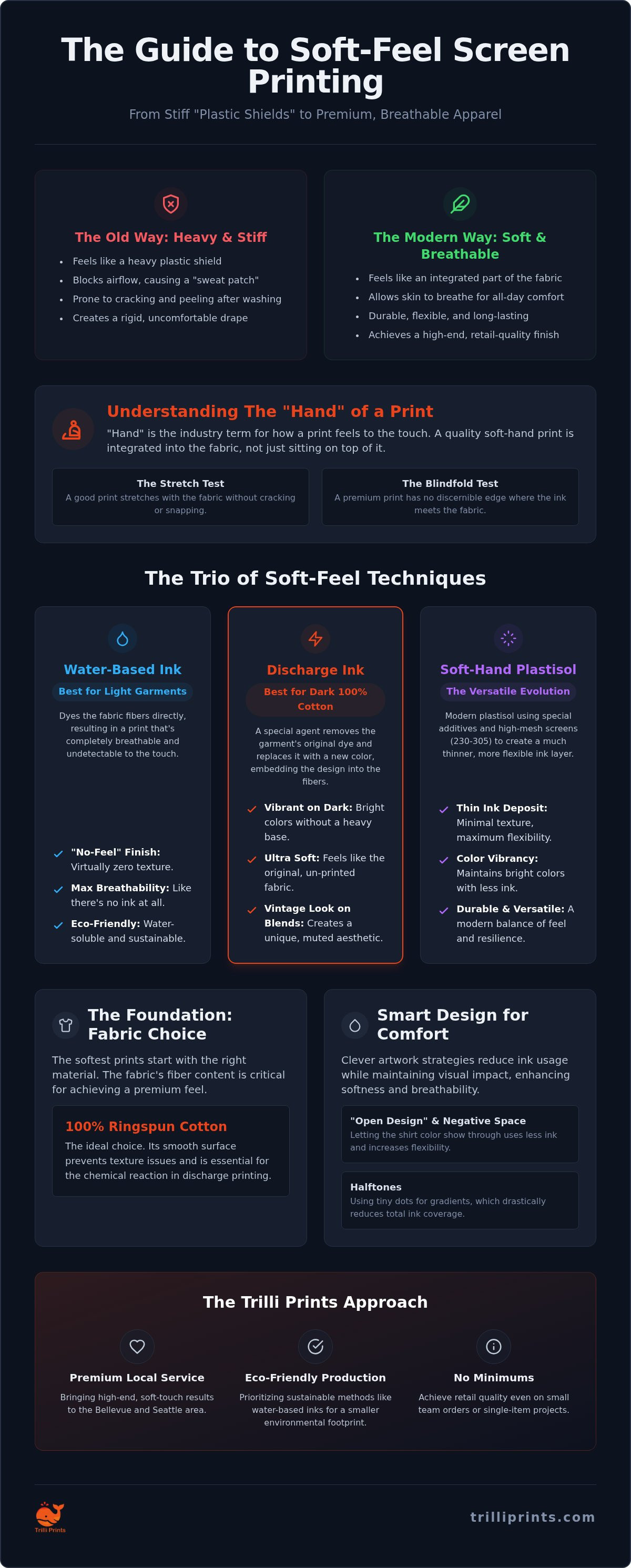
In the garment industry, "hand" describes how a print feels to the touch. Most people recognize a bad print immediately. It feels like a stiff, rubbery layer sitting on top of the shirt. By 2026, consumer expectations have shifted. People no longer want heavy, cumbersome merchandise; they want apparel that moves with them. Soft feel screen printing is the technical solution that prioritizes this comfort without sacrificing the visual impact of your brand.
High-quality soft-feel techniques improve the drape of a t-shirt. Drape refers to how the fabric hangs and flows against the body. When a print is too thick, it creates a rigid surface that doesn't bend. This makes the garment look cheap and feel awkward. By integrating ink into the fibers, the shirt retains its natural flexibility and lasts longer through repeated wash cycles. A shirt that moves with the wearer is a shirt that gets worn more often, increasing the long-term visibility of your design.
The Problem with Heavy Ink Deposits
Traditional heavy ink deposits create a barrier that blocks airflow. This often results in the dreaded "sweat patch" under the design because the skin can't breathe through the thick layer of plastisol. Beyond discomfort, these heavy prints are prone to premature cracking and peeling. Because the ink is a thick shell rather than a flexible bond, it eventually breaks under the stress of daily wear. Modern brands have moved away from "bulletproof" prints in favor of lightweight, breathable alternatives that prioritize the wearer's experience.
Measuring Tactile Quality in Custom Apparel
You can judge the quality of a print using a few simple methods. The stretch test involves pulling the fabric to see if the ink moves with the fibers or resists them. A high-quality soft-hand print will expand and retract without snapping or showing the fabric underneath through cracks. Another method is the blindfold touch test. If you can't feel the edge of the print where the ink meets the fabric, you've achieved a retail-quality result that rivals high-end fashion brands.
Retail brands in Bellevue boutiques prioritize these results because they know comfort drives repeat sales. Hand is the physical weight and texture of ink integrated into fabric fibers. When you choose soft feel screen printing, you're choosing a product that feels like a part of the garment rather than an afterthought.
The Trio of Techniques: Water-Based, Discharge, and Soft-Hand Plastisol
Achieving a retail-quality finish requires selecting the specific chemistry that matches your garment choice. While traditional methods relied on thick layers, modern soft feel screen printing utilizes three primary techniques to keep your apparel lightweight. Each method offers a unique balance of durability and texture. Understanding these options helps you avoid the "plastic shield" feel and ensures your gear is comfortable from the first wear.
Water-based inks are the gold standard for "no-feel" prints on light-colored garments. Because the ink is thin and water-soluble, it dyes the fabric fibers instead of sitting on top of them. This creates a print that is completely breathable and virtually undetectable to the touch. For dark garments, discharge printing is the preferred solution. This process uses a specialized agent to "bleach" the original dye out of the shirt, replacing it with your desired ink color. The result is a vibrant design on a black or navy shirt that feels like it’s part of the fabric itself.
Water-Based vs. Discharge: When to Use Which?
Choosing between these depends on your shirt color and fabric composition. Water-based ink is a popular, eco-friendly choice for Seattle custom apparel projects that prioritize sustainability and a soft touch. It works best on white or heather-grey shirts where the ink can easily saturate the fibers.
Discharge printing is the magic tool for dark shirts. It eliminates the need for a heavy white underbase, which is the main cause of the heavy, stiff feel in traditional printing. One limitation to remember is that discharge chemistry only reacts with 100% cotton fibers. If you’re using a blend, the discharge agent won't remove the color from the polyester strands. This creates a slightly muted, vintage look that many brands actually prefer for its unique aesthetic.
The Evolution of Soft-Hand Plastisol in 2026
Plastisol hasn't been left behind. In 2026, we use "fashion soft" additives and "chino" bases to thin the ink without losing its color vibrancy. By using high-mesh screens between 230 and 305 mesh, we lay down a significantly thinner ink deposit. This is often the best option for complex Kirkland custom apparel orders involving polyester blends or moisture-wicking fabrics. It provides the durability of traditional ink with the comfort of a high-end boutique garment. If you're unsure which method fits your design, you can request a custom quote to get expert advice on the best technical approach for your project.
The Fabric Factor: Choosing Garments for Maximum Softness
While ink chemistry is a vital part of the equation, your choice of fabric determines the ultimate success of soft feel screen printing. Think of the garment as your canvas. If the canvas is rough or uneven, the ink cannot lay flat. 100% ringspun cotton is the essential foundation for a retail-quality finish. Unlike standard carded cotton, which is made by simply bundling fibers together, ringspun cotton is continuously twisted and thinned. This process creates a smooth, strong surface that allows the ink to bond directly with the fibers rather than sitting on top of a "hairy" layer of loose thread.
Low-quality fabrics often suffer from fibrillation. This happens when tiny cotton fibers poke through the ink after the first wash, making the design look faded and feel fuzzy. Tri-blends and CVC (Chief Value Cotton) fabrics offer a great alternative for those seeking a vintage, heathered look. These blends are naturally soft and drape well, though they require specific ink handling to maintain a lightweight feel. Fabric weight, measured in GSM (grams per square meter), also plays a role. A lighter 140 to 150 GSM shirt often yields the softest tactile result, while heavier fabrics may require slightly more ink to achieve full coverage.
Natural vs. Synthetic Fibers
Synthetic fibers like polyester introduce unique challenges, specifically dye migration. This occurs when the heat from the drying process causes the garment's dye to turn into a gas and seep into your ink, changing its color. To prevent this, we use high-density knits that provide a smooth, stable surface for the print. These tight knits ensure the ink sits evenly without needing a thick, heavy application. For a deeper dive into which blends work best for your project, check out our 2026 Guide to Custom T-Shirt Printing in Bellevue for fabric recommendations.
The Role of Garment Pre-Treatments
Premium blank shirts often undergo pre-treatments like enzyme washes before they reach the printer. These washes use organic catalysts to strip away the tiny "fuzz" on the fabric surface, leaving it exceptionally smooth. Starting with a pre-shrunk, enzyme-washed garment ensures your design stays crisp and soft for the life of the shirt. When planning your next project for Redmond custom apparel, selecting a high-end blank is the most effective way to guarantee a finished product that people will actually want to wear every day.
Designing for Comfort: Artwork Strategies for Soft Results
Design is often the most overlooked factor in achieving soft feel screen printing. You can use the best ink and the softest ringspun cotton, but a giant square of solid ink will always feel heavy. The "Open Design" concept is a strategy where you use the shirt's color as a primary element. Instead of printing a solid background, you let the fabric show through. This significantly reduces the total surface area covered by ink and maintains the natural breathability of the garment.
Vintage and distressed textures are another powerful tool for comfort. By adding subtle "cracks" or "wear" to your digital artwork, you break up the continuous layer of ink. This makes the shirt more flexible because the print isn't one rigid sheet; it's a series of smaller, disconnected sections. It allows the garment to stretch and move without resistance. Avoiding large blocks of solid color ensures that your custom apparel doesn't feel like a stiff patch on the wearer's chest.
Halftones and High Mesh Counts
Halftones are tiny dots of ink that create the illusion of solid colors or smooth gradients. Because these dots have space between them, the fabric can bend and breathe freely even in detailed areas. In 2026, professional printers use finer mesh counts to ensure these dots remain crisp and microscopic. Negative space in a design is the secret to a soft-hand finish. This approach allows you to achieve complex, photographic results while using 50% less ink than a traditional solid print.
Typography and Line Weight
Choosing thin lines and "knockout" text can transform how your apparel feels. Knockout text uses the garment's color to form the letters, meaning zero ink is used for the typography itself. This is especially important for custom hoodies in Bellevue, where the thicker fleece texture can make heavy ink deposits feel even bulkier. If you have a corporate logo with thick elements, consider adapting it for a "lifestyle" feel by thinning the strokes or adding a textured overlay. Ready to see how your artwork can be optimized for maximum comfort? You can get a custom quote today and our team will help you choose the best design strategy for your project.
The Trilli Prints Approach: Premium Soft-Feel Printing in Bellevue
At Trilli Prints, we believe high-quality custom gear should be accessible to everyone, from local startups to established Eastside brands. Our Bellevue studio specializes in soft feel screen printing because we know that a shirt's value is determined by how often it is worn. While giant online retailers focus on volume, we focus on the tactile experience of the finished product. We treat every garment as a partnership. This ensures your creative vision translates into a retail-ready piece that people truly love to wear.
We take pride in serving our neighbors in the Puget Sound area. Local brands trust us because we understand the specific needs of our community, from tech team uniforms to event merch for local festivals. By keeping our production local, we offer a level of quality control and personal communication that mass-production facilities simply cannot match. You get the expertise of a professional studio with the approachability of a local partner.
Eco-Friendly and Sustainable Practices
Our commitment to quality includes a deep responsibility to our environment and our customers' health. We utilize phthalate-free ink systems and advanced water-based chemistries to ensure a safer, softer product. These eco-friendly choices don't just protect the planet; they are the technical foundation for the "no-feel" prints we've discussed throughout this guide. By choosing a local partner, you also significantly reduce the carbon footprint associated with shipping and logistics.
When you compare Vistaprint vs Local Screen Printing, the difference in craftsmanship becomes clear. Mass-market options often rely on thick heat transfers or standard plastisol that can feel heavy and stiff. We prioritize the "hand" of the print in every job, regardless of the order size. This attention to detail ensures your brand looks professional and feels premium.
Ready to Start Your Project?
One of our biggest advantages is our "No Minimums" policy. You can get professional, soft-feel quality for a single one-off gift or a small batch for your local team. We combine this flexibility with a 2026 commitment to fast turnaround times. We don't believe you should have to wait weeks for premium results. We never rush a job at the expense of the print's softness or durability.
When you are ready to begin, simply mention that you are looking for a "soft hand" or "retail feel" in your request. Our team will consult with you on the best ink and fabric combinations to meet your specific needs. We’ll help you navigate the technical choices to ensure your gear stands out for all the right reasons. You can get a custom quote for your soft-feel apparel today! and experience the difference of working with a dedicated local expert.
Elevate Your Brand with Retail-Quality Comfort
Creating apparel that people love to wear starts with a commitment to quality and comfort. By combining high-mesh tension with the right fabric choices, you can achieve a professional finish that stays breathable and flexible. We've seen how water-based inks and discharge techniques ensure the design feels like part of the fabric rather than a heavy layer on top.
At Trilli Prints, we specialize in high-end soft feel screen printing right here in our Bellevue studio. We offer eco-friendly ink options and have no minimum order requirements; this makes it easy to test new designs or outfit your whole team. Our fast local turnaround ensures your project's ready when you need it without compromising on the tactile quality of the final product.
Ready to see the difference for yourself? You can Get a Custom Quote for Soft-Feel Apparel and start your next project today. We're excited to help you bring your creative vision to life with gear that feels as good as it looks.
Frequently Asked Questions
Is soft feel screen printing more expensive than regular printing?
Generally, it costs about the same as standard screen printing, though it requires more technical expertise. The cost is often determined by the complexity of the design and the number of colors rather than the ink type itself. At our Bellevue studio, we focus on providing retail-quality results without unnecessary markups. Because we have no minimum order requirements, you can access these high-end finishes for small team batches or single gifts without a massive investment.
Can I get a soft feel print on black or dark-colored t-shirts?
Yes, you can achieve a soft feel on dark garments using discharge printing or thin plastisol with fashion soft additives. Discharge ink works by removing the original dye from the fabric and replacing it with your chosen color. This avoids the heavy white underbase that usually makes dark prints feel thick and rubbery. It’s an excellent choice for Seattle brands that want vibrant designs on black shirts while maintaining a lightweight, breathable feel.
Does soft feel ink wash off or fade faster?
No, soft feel screen printing is designed for high durability and won't wash off when cured correctly. In fact, because the ink is integrated into the fabric fibers rather than sitting on top, it's less likely to crack or peel over time. While water-based inks may develop a slightly vintage look after dozens of washes, the print remains a permanent part of the garment. We use eco-friendly inks that meet modern standards for longevity.
What is the difference between water-based ink and soft-hand plastisol?
Water-based ink is a thin, breathable dye that sinks into the fabric, making it virtually undetectable to the touch. It's the gold standard for no-feel prints on light shirts. Soft-hand plastisol is a traditional plastic-based ink that has been thinned with additives and printed through high-mesh screens. This allows it to mimic the softness of water-based ink while offering the opacity and color consistency that plastisol is known for, especially on synthetic blends.
Do I need to provide special artwork for soft feel printing?
You don't need special software, but certain design choices make the result much softer. Using halftones, gradients, and open designs that let the shirt color show through will always feel better than large, solid blocks of ink. Our team in Bellevue can review your current files and suggest minor adjustments to help you get the best possible hand. We simplify the custom process so you don't need to be a design expert.
What is the best fabric for a 'no-feel' screen print?
100% ringspun cotton is the best choice for achieving a true no-feel result. The smooth, tight weave of ringspun cotton allows the ink to bond perfectly with the fibers without any fuzzy texture poking through. Tri-blends and CVC fabrics also work well for a soft, vintage aesthetic. Choosing a high-quality blank from the start ensures your Redmond or Kirkland custom apparel project feels premium and lasts through hundreds of wears.
Can you do soft feel printing on hoodies and sweatshirts?
Yes, we can apply soft-hand techniques to hoodies and sweatshirts, though the results vary based on the fleece thickness. Because hoodies are heavier, we often use thinner ink deposits to prevent the design from feeling like a rigid plate on the chest. This maintains the natural warmth and coziness of the garment. Eastside brands often choose these techniques for their premium spirit wear to ensure the gear is comfortable for all-day use.
How do I request a soft feel print for my Bellevue small business?
Simply mention that you want a soft hand or retail feel when you request your quote. Our local Bellevue experts will guide you through the best ink and fabric combinations for your specific project. We serve the entire Eastside, including Redmond and Kirkland, with fast turnaround and no minimums. You can start the process of ordering soft feel screen printing by visiting our quote page to share your design ideas with our team.